What is a Mobile Data Terminal (MDT)?
Published: 25 Aug 2026
In today’s fast-paced world, technology is making work faster and more efficient. One key tool driving this change is the Mobile Data Terminal (MDT). MDTs are portable computers that help workers access and process information quickly while on the move.
These devices are transforming industries like logistics, healthcare, and public safety. In logistics, MDTs help drivers with real-time route updates. They make patient data instantly accessible to medical personnel. In public safety, MDTs provide real-time data, helping first responders make quick decisions.
How Do MDTs Work?
Mobile Data Terminals (MDTs) are powerful tools that help industries like logistics, healthcare, and public safety by providing real-time data on the go. Let’s break down how they work in simple terms.
Communication with Central Systems
MDTs rely on constant communication with a central system, like a company’s database or a hospital’s network. This connection is crucial because it allows the MDT to receive and send information quickly.
Technologies Behind MDTs
MDTs use several key technologies to function smoothly:
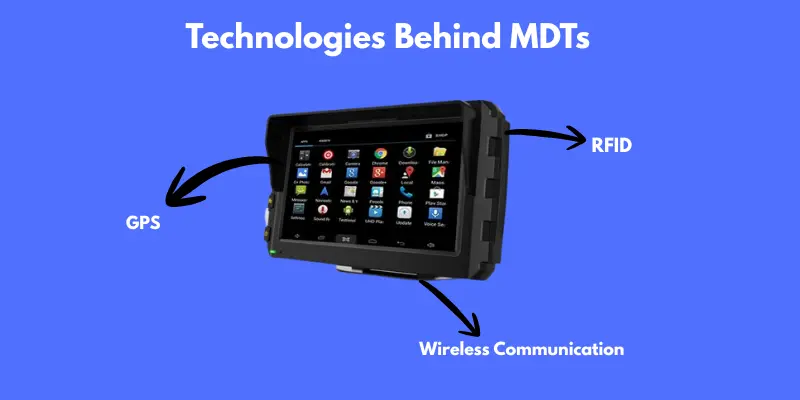
- GPS (Global Positioning System): This helps track the location of the MDT, whether it’s a delivery truck or an emergency vehicle. With GPS, MDTs can provide accurate, real-time location updates and help drivers or responders find the fastest routes.
- RFID (Radio Frequency Identification): RFID helps MDTs interact with tagged items. For instance, in healthcare, MDTs can scan an RFID tag on a patient’s wristband to instantly access their medical records, ensuring quick and accurate care.
- Wireless Communication: MDTs rely on Wi-Fi, cellular networks, or satellite connections to send and receive data. Even when workers are on the move, this wireless communication enables instant updates.
Real-World Use Cases
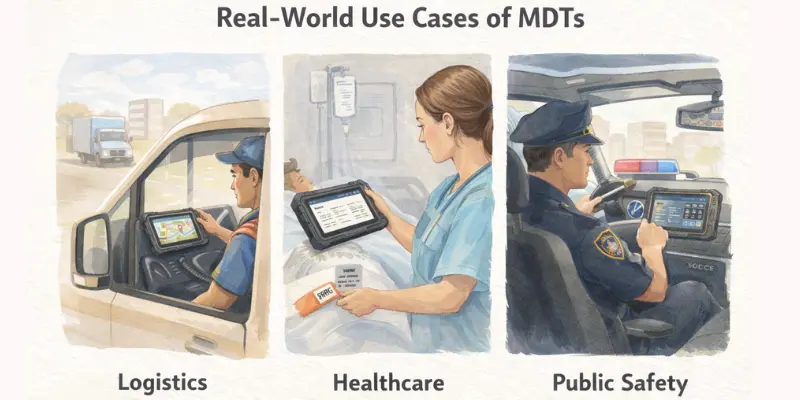
- In Logistics: A delivery driver uses their MDT to get real-time route updates. The MDT instantly updates the driver with new instructions or rerouted directions when a package is delayed or there’s an accident on the road.
- In Healthcare: A nurse uses an MDT to scan a patient’s RFID wristband. The MDT then connects wirelessly to the hospital’s database, bringing up the patient’s medical history and latest test results, allowing for quick, informed decisions.
- In Public Safety: A police officer in a patrol car uses an MDT to receive live updates on incidents, check the status of a criminal, or access nearby surveillance cameras—all in real time. This helps officers respond to emergencies faster and more accurately.
Improving Operational Efficiency
By using these technologies, MDTs ensure information is always up to date, reducing delays, mistakes, and miscommunication. This constant flow of information allows businesses and services to run more smoothly and efficiently. In every industry, MDTs are helping people stay connected and speed up smarter decisions.
In short, MDTs are a key part of modern operations, keeping industries moving forward with real-time data, accurate locations, and rapid communication.
Key Features of Mobile Data Terminals
Mobile Data Terminals (MDTs) are designed to meet the needs of industries that rely on real-time data and constant communication. Here are the key features that make MDTs effective and reliable in different settings:
Display Quality
The display on an MDT is very important for how easy it is to use, especially when you’re working in different places.
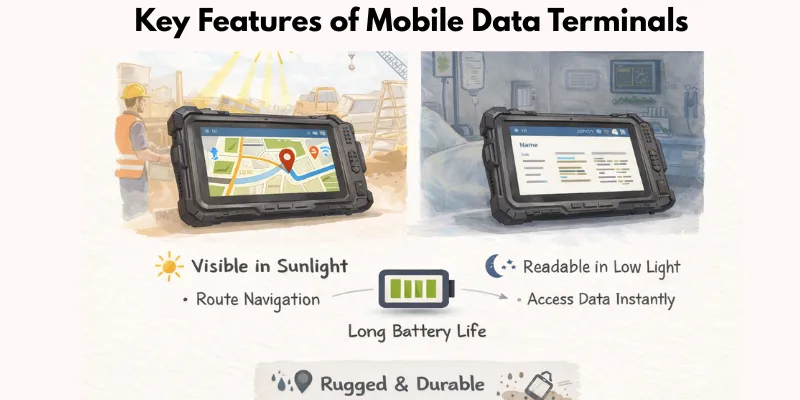
- Visibility in Bright Sunlight: Many MDTs have screens that are very bright, so they can still be read even when the sun is shining directly on them. This is essential for people who work outside, like delivery drivers or field technicians, who need screens that are always clear and visible.
- Visibility in Low Light: Similarly, MDTs often include backlit displays or features to adjust screen brightness in low-light environments. This is particularly useful in emergency services or warehouses, where work can extend into night hours.
Battery Life
Battery life is a critical feature for industries where long shifts are the norm.
- Extended Usage: MDTs with long battery life can last a full workday or longer on a single charge, ensuring that workers in logistics, healthcare, or public safety don’t need to constantly worry about recharging.
- Efficiency Boost: MDTs with better battery life reduce downtime caused by charging, improving overall productivity. This can be especially important in environments where every minute counts, such as emergency response teams or logistics operations.
Ruggedness/Build Quality
MDTs are built to withstand tough conditions. Their durability is a major selling point for industries that operate in harsh environments.
- Fieldwork and Warehouses: MDTs used in these settings are often water-resistant, shockproof, and dustproof, making them ideal for workers who face rugged conditions. For instance, a warehouse worker or a construction site manager can drop or expose their MDT to dust without worrying about damaging it.
- Emergency Response: In public safety, MDTs must withstand high-impact situations, such as accidental drops during an emergency. Police officers, firefighters, and paramedics can rely on MDTs designed for rugged use, regardless of the situation.
Wireless Connectivity
Wireless connectivity is necessary for MDTs to stay connected to central systems and get updates in real time.
- Wi-Fi and Bluetooth: These technologies let MDTs stay connected to networks, get cloud data, and get live updates. For instance, a healthcare worker can quickly update patient records using Wi-Fi, and a logistics manager can use bluetooth to find out where a delivery truck is. This smooth communication makes everything work better.
- Real-Time Data Transmission: With wireless capabilities, MDTs help industries like logistics, public safety, and healthcare stay connected in real-time, ensuring quick responses to any situation.
GPS/Location Tracking
GPS is an essential feature for industries where knowing the exact location of personnel or assets is crucial.
- Fleet Management and Logistics: MDTs equipped with GPS help fleet managers track the location of delivery trucks, ensuring that goods are delivered on time. This also helps in route optimization by avoiding traffic or road closures.
- Public Safety: For first responders, GPS-enabled MDTs ensure that officers or paramedics are always on the right path. With GPS, dispatch can send the nearest available unit, reducing response times and improving outcomes in emergencies.
Industries That Use MDTs
A wide range of industries use Mobile Data Terminals (MDTs), benefiting from their real-time data access, communication capabilities, and operational efficiency. Let’s explore how MDTs are making a difference in various sectors:
Logistics
In the logistics industry, MDTs are crucial for streamlining operations, enhancing delivery tracking, and improving fleet management. With real-time data updates, drivers and dispatchers can ensure accurate deliveries and optimize routes for faster service.
- Real-Life Example: A logistics company uses MDTs to keep track of delivery trucks in real time. This helps them reroute drivers to avoid traffic or road closures. Drivers take the most efficient routes, which makes deliveries 15% faster and cuts fuel costs by 10%.
Healthcare
MDTs in healthcare are used for patient tracking, real-time data access, and improving communication among medical staff. From emergency medical services to hospitals, MDTs enable healthcare professionals to access patient records and make quick decisions during critical situations.
- Real-Life Example: In an emergency room, doctors use MDTs to quickly look up a patient’s medical history and lab results. This reduces the time to diagnose and treat patients, which in turn improves patient outcomes and decreases wait times.
Manufacturing
On the factory floor, MDTs are essential for managing inventory, monitoring equipment, and ensuring worker safety. Workers and managers use MDTs to track production, monitor machinery health, and keep an eye on stock levels in real-time.
- Real-Life Example: A manufacturing plant uses MDTs to monitor machinery performance. The system alerts workers to potential malfunctions, reducing downtime by 20% and improving overall equipment efficiency.
Field Services
Field services, such as construction, maintenance, and repair work, rely on MDTs to provide mobile workers with the tools and data they need to do their jobs efficiently. Features like GPS and ruggedness make MDTs perfect for these industries, as workers often operate in harsh environments.
- Real-Life Example: A construction company equips workers with MDTs that offer GPS for navigation and real-time project updates. This helps the team stay on schedule and coordinates tasks across different sites, improving project completion times by 30%.
Public Safety
Police, fire departments, and other emergency responders use MDTs a lot to improve communication, gather information, and make better decisions in emergencies. These tools help first responders stay in touch and get important information right away.
- Real-Life Example: During a wildfire, firefighters use MDTs to get real-time updates on the fire’s condition and plan evacuations. This cuts down on response times and makes sure that first responders are always up-to-date, which makes things safer for everyone.
Benefits of Using MDTs
Mobile Data Terminals (MDTs) provide numerous benefits across industries, improving efficiency, decision-making, safety, and cost-effectiveness. Here are the key advantages of investing in MDTs:
Improved Efficiency
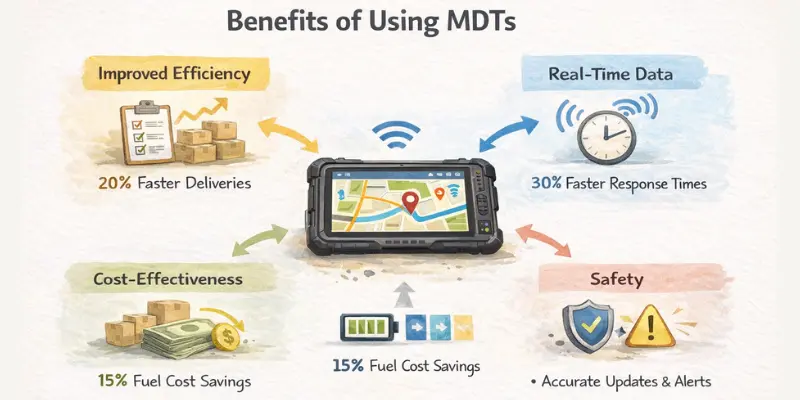
- MDTs automate data entry and speed up communication, allowing workers to focus on more important tasks.
- Real-Life Example: In logistics, MDTs streamline package delivery by automatically updating drivers on new delivery routes and schedules. This has led to a 20% reduction in delivery times, improving customer satisfaction and overall operational speed.
Real-Time Data
- MDTs provide instant access to real-time data, enabling quick decision-making and reducing operational delays.
- Real-Life Example: In the healthcare industry, EMTs utilize MDTs to instantly access patient information. This allows them to make faster decisions about treatment and care, improving patient outcomes and reducing wait times in emergency situations.
Safety
- MDTs help improve safety by providing workers with accurate, up-to-date information that helps them make informed decisions in the field.
- Real-Life Example: In public safety, police officers use MDTs to access live updates on ongoing incidents, which helps them respond more quickly and accurately. This results in faster decision-making, reducing risks for both officers and civilians during emergencies.
Cost-Effectiveness
MDTs help lower operational costs by making work more efficient, cutting down on mistakes, and reducing downtime.
- Real-Life Example: In manufacturing, MDTs give workers instant access to maintenance data, allowing them to detect issues before they lead to equipment breakdowns. This proactive approach reduces unplanned downtime by 25%, saving the company money on repairs and lost productivity.
Common Challenges and Limitations of MDTs
MDTs sound amazing, right? But every tool has its downsides. Let’s look at the real challenges businesses face.
1. High Initial Cost
MDTs cost more than regular tablets. Rugged hardware and specialized software add to the price. Small businesses may find this a big investment upfront.
2. Training Takes Time
Workers need proper training to use MDTs well. New software and interfaces feel confusing at first. This training period slows down daily operations temporarily.
3. Connectivity Issues in Remote Areas
MDTs need strong wireless signals to work. Rural areas or basements often have weak coverage. This gap causes delays in receiving real-time updates.
4. Data Security Concerns
MDTs handle sensitive data every day. This includes patient records, police reports, and business information. Companies must invest in strong encryption to keep this data safe.
5. Integration Problems
Many businesses already use other software systems. Connecting MDTs to these existing systems takes technical effort. Poor integration causes confusion and wasted time.
Real-Life Example:
A logistics company buys new MDTs for their fleet. Drivers struggle with the new interface during the first week. Deliveries slow down slightly until the team gets comfortable.
Tip: Budget extra time for training and testing before a full company-wide rollout.
How to Choose the Right MDT for Your Industry
Choosing the right Mobile Data Terminal (MDT) for your industry can seem overwhelming, but by following these simple steps, you can find the best fit for your needs. Here’s a clear guide to help you make an informed decision.
Identify Your Industry Needs
- Logistics: Choose an MDT with GPS integration and long battery life for continuous tracking and extended shifts. This helps drivers stay on route and manage deliveries efficiently.
- Healthcare: Opt for a compact, easy-to-carry MDT with a clear display for quick access to patient data. Fast wireless connectivity is also key for real-time updates.
- Field Service: Select a rugged MDT that can withstand drops, dust, and water. Features like GPS will help workers navigate tough environments and remote locations.
Assess durability and the environment.
- If your work is in rough or unpredictable environments, look for an MDT that is shockproof, water-resistant, and dustproof. This is especially important for field services, public safety, and construction workers who are exposed to harsh conditions.
- Example: An MDT that can survive extreme temperatures and drops is ideal for emergency responders who work in unpredictable, high-stress environments.
Budget Considerations
- Please take your budget into account and align it with the features that are essential for your needs. Don’t overspend on advanced features if they aren’t essential for your work.
- Example: For logistics, a mid-range MDT with GPS and basic wireless connectivity may suffice. However, for hospitals, you may need a model with advanced wireless capabilities and a high-quality display, which could be a bit more expensive.
Technical Requirements
- Battery Life: Make sure the MDT lasts through a full workday, especially if you’re in logistics or healthcare, where workers are on the go for long periods.
- Screen Size & Display Quality: Choose a screen size that’s comfortable for reading and working with data. For example, a larger screen may be necessary in healthcare for reading patient info, while a smaller one might be sufficient in logistics.
- Wireless Connectivity: Ensure the MDT supports strong Wi-Fi, Bluetooth, or cellular connectivity so you can stay connected and receive real-time updates, which is critical for healthcare and emergency services.
MDT Pricing and Cost Factors
How much does an MDT actually cost? The answer depends on several factors.
What Affects the Price?
- Ruggedness Level: Devices built for extreme drops, dust, and water cost more than basic models.
- Screen Size and Quality: Larger, brighter screens increase the price.
- Software Licensing: Some MDTs need ongoing software subscriptions. Others use a one-time purchase model.
- Industry-Specific Features: GPS tracking, RFID scanning, and custom apps add extra cost.
- Brand and Support: Trusted brands with strong customer support often charge more.
One-Time Cost vs. Subscription Model
- One-Time Purchase: You pay once for the hardware. This works well for small teams with a fixed budget.
- Subscription Model: You pay monthly or yearly for software updates and support. This suits larger companies needing constant upgrades.
Real-Life Example:
A small delivery company buys basic MDTs with a one-time payment. A large hospital network chooses a subscription model instead. The hospital needs constant software updates and top security, so the extra cost makes sense for them.
Tip: Compare both models based on your team size and how often you need updates. A smaller team may save money with a one-time purchase.
Real-Life Examples of MDTs in Action.
Mobile Data Terminals (MDTs) have been very useful in many ways. They help people talk to each other, stay safe, and make choices. Here are some real-life examples of how MDTs have been useful in different ways:
Logistics: Improved Delivery Efficiency
- Before: A logistics company faced frequent delivery delays, poor communication between drivers and dispatchers, and frequent routing errors, leading to increased fuel costs and customer dissatisfaction.
- After: By implementing MDTs equipped with real-time tracking, route optimization, and instant communication with dispatch, drivers received live updates on traffic, road conditions, and delivery schedules.
- Results: Delivery times improved by 20%, and fuel costs decreased by 15% due to better route planning. Customer satisfaction increased as deliveries became more predictable and timely.
Healthcare: Faster and More Accurate Patient Care
Before: In a busy hospital, medical staff had to manually search for patient information in paper records or outdated computer systems, resulting in longer wait times for patients and delays in treatment.
- After: MDTs provided doctors and nurses with instant access to real-time patient data (medical history, test results, allergies) directly from the bedside or emergency room.
- Results: Treatment times were reduced by 30%, and errors in patient data were minimized, leading to better patient outcomes. The speed of care improved, allowing medical teams to respond more effectively in emergency situations.
- Key Metrics: 30% faster treatment times, reduced medical errors, and improved patient outcomes.
Field Services: Enhanced Technician Efficiency
- Before: A field service company faced issues with technicians having limited access to important information, causing delays in job completion and increased downtime due to a lack of real-time updates.
- After: MDTs provided field technicians with access to live job updates, maintenance logs, and the ability to communicate directly with the office. Technicians could instantly access customer histories and identify issues, speeding up job completion.
- Results: Job completion times decreased by 25%, and downtime was reduced, as technicians were more prepared to handle issues. The company also noticed improved customer satisfaction due to faster response times.
- Key Metrics: 25% reduction in job completion times, better customer satisfaction, and reduced downtime.
Public Safety: Faster Response Times and Better Communication
- Before: Emergency responders such as fire and police departments struggled with delayed response times and inefficient communication, as they relied on traditional radio communication, leading to slow and sometimes inaccurate information during critical situations.
- After: MDTs were installed in police cars, fire trucks, and ambulances, providing real-time GPS tracking, instant communication with dispatch, and access to emergency data. First responders could receive updates on incident locations, traffic conditions, and emergency reports directly to their terminals.
- Results: Response times improved by 15%, and the quality of communication between teams and dispatch improved significantly, leading to quicker and more informed decisions. This directly contributed to saving lives and improving public safety.
- Key Metrics: 15% faster response times, better team coordination, and improved incident handling.
Conclusion
So, guys, we’ve gone through a lot today about what a mobile data terminal (MDT) is and how it’s changing the way industries work. From improving delivery efficiency in logistics to making patient care faster in healthcare, MDTs have proven themselves to be a game-changer. We also looked at how they’re enhancing field service operations and helping public safety teams respond more quickly in emergencies.
My recommendation? If you’re in an industry that relies on real-time data and communication, investing in an MDT is definitely worth considering. It can improve efficiency, save time, and make your team’s work smoother and more effective. Stay tuned, folks, for more insights on how tech is changing the world!
FAQs
An MDT is a device used in vehicles for real-time communication, sending and receiving data like job updates or maps, mainly in logistics, healthcare, and public safety.
MDTs use wireless connections to communicate with central systems, displaying real-time information like task details or location updates for field workers.
MDTs are used for vehicle tracking, managing deliveries, and supporting healthcare and public safety workers with real-time data access.
MDTs are most useful in logistics, public safety, and field services, helping workers stay connected with their teams for efficient operations.
Yes, MDTs enhance communication by providing real-time data, improving decision-making and reducing delays and errors in various industries.



- Be Respectful
- Stay Relevant
- Stay Positive
- True Feedback
- Encourage Discussion
- Avoid Spamming
- No Fake News
- Don't Copy-Paste
- No Personal Attacks
- Be Respectful
- Stay Relevant
- Stay Positive
- True Feedback
- Encourage Discussion
- Avoid Spamming
- No Fake News
- Don't Copy-Paste
- No Personal Attacks
