What Is a Mobile Processor and Why It Matters
Published: 13 Jan 2026
Are you confused about which mobile processor is right for you? You’re not alone! With so many options out there, it can be tough to choose. But don’t worry! In this article, we’ll explore the different types of mobile processors and help you pick the best one for your needs. We’ll also break down the key features to look for so you can make an informed decision. By the end, you’ll have a clearer idea of what to look for when selecting a mobile processor. Let’s dive in!
What is a mobile processor?
Think of a mobile processor like the brain of your smartphone. Just like how your brain controls everything you do, the mobile processor controls how your phone works. It helps run apps, play games, and make sure your phone responds quickly when you tap or swipe. Without a good processor, your phone would feel slow and sluggish, just like how your brain would struggle if it couldn’t focus properly. So, when you pick a phone, the mobile processor plays a big role in how smoothly everything runs.
The Components of a Mobile Processor
A mobile processor has several important parts that work together to make your phone perform well. Let’s break down each one and see how it affects your everyday phone use.
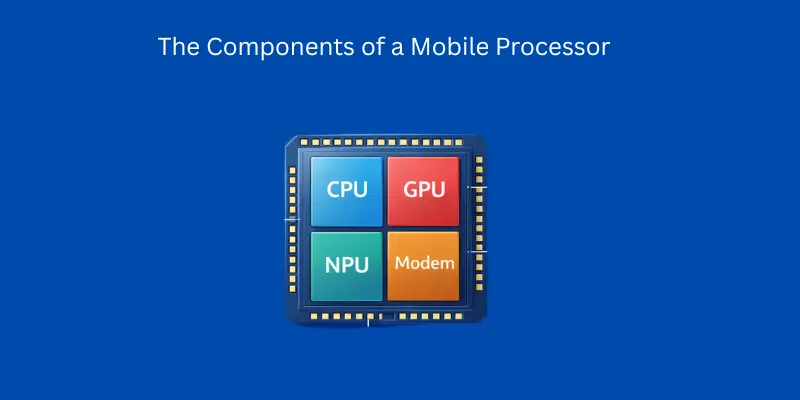
CPU (Central Processing Unit)
The CPU is like the “boss” of your mobile processor. It manages the overall performance of your phone. When you open an app, scroll through social media, or switch between tasks, the CPU makes sure everything runs smoothly. If you’ve ever noticed how quickly your phone opens an app or loads a webpage, that’s the CPU at work.
Key Points:
- Handles all basic tasks like opening apps and browsing the web.
- Make sure the phone runs smoothly without lag.
- Directly affects the phone’s speed and responsiveness.
Example: If you’re switching between apps quickly, the CPU makes sure your phone doesn’t freeze or lag.
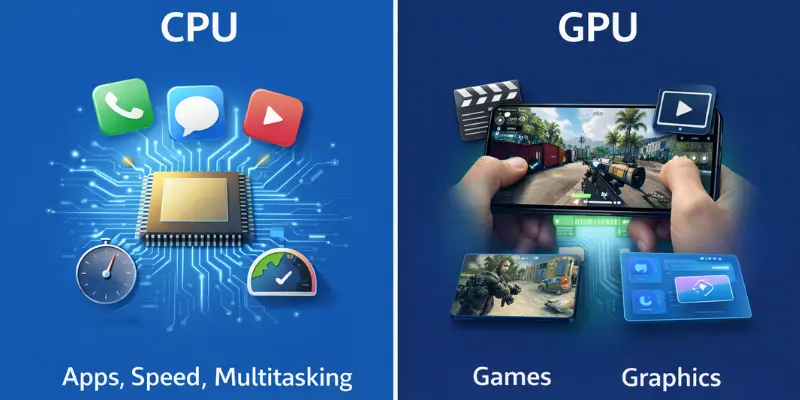
GPU (Graphics Processing Unit)
The GPU is the part of the processor that focuses on graphics and gaming. If you love playing games or watching high-quality videos on your phone, the GPU makes sure everything looks sharp and smooth. It’s responsible for rendering the images, animations, and visuals you see on your screen.
Key Points:
- Handles all visuals, including games, videos, and animations.
- Makes sure graphics are sharp, smooth, and detailed.
- Essential for activities like gaming or watching high-definition videos.
Example: If you’re playing a game with 3D graphics, the GPU helps create those smooth visuals and fast movements.
NPU (Neural Processing Unit)
The NPU is a newer component, and it’s designed to handle AI (Artificial Intelligence) tasks. It helps your phone with things like improving your photos, recognizing faces, and even giving suggestions based on your habits. If you’ve ever used facial recognition to unlock your phone or noticed how your camera improves pictures automatically, that’s the NPU at work.
Key Points:
- Handles AI tasks like facial recognition and photo enhancement.
- Improves features like camera quality, voice recognition, and personalization.
- Over time, it helps your phone “learn” and change to fit your needs.
Example: The NPU helps improve the quality of photos, like making them clearer and brighter, especially in low light.
Modem
The modem is responsible for keeping your phone connected to the internet, whether it’s through Wi-Fi or mobile data. It makes sure you can stream videos, browse the web, and stay connected without interruptions. Without a modem, you wouldn’t be able to make calls or use the internet!
Key Points:
- Keeps your phone connected to the internet via Wi-Fi or mobile data.
- Allows comfortable browsing, streaming, and calling.
- Ensures smooth connections for video calls and online games.
Example: The modem is what allows you to video call your friends or browse social media without losing your connection.
Types of Mobile Processors and Their Specifications
Mobile processors come in various types, each with its strengths and weaknesses. Understanding these processors can help you choose the right one for your needs. Let’s dive into the four major processor families: Snapdragon, Apple A-series, MediaTek, and Exynos, and explore how they compare in terms of performance, efficiency, and real-world benefits.
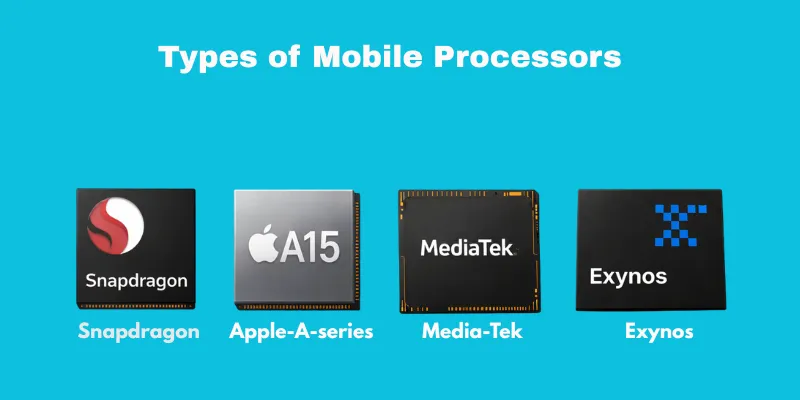
Snapdragon Processors
Snapdragon processors are widely known for their excellent performance, especially when it comes to gaming and multitasking. They are used in many Android smartphones and are famous for offering a balance of power and efficiency.
Key Specifications:
- Clock Speed: Around 2.8 GHz (varies by model).
- Number of Cores: Typically 8 cores (high-performance and efficiency cores).
- GPU: Adreno (varies by model, such as Adreno 650 in the Snapdragon 865).
Performance Comparison:
Snapdragon processors offer powerful performance and excellent graphics. This makes them ideal for gaming, heavy multitasking, and running resource-hungry apps. Snapdragon’s GPU (Adreno) is known for providing smooth and high-quality visuals, especially in games.
Best for:
- Gaming: If you love playing mobile games, Snapdragon’s powerful GPU and high clock speed ensure smooth and immersive experiences.
- Multitasking: Snapdragon can handle running multiple apps at once without slowing down, making it a good choice for users who juggle various tasks.
Real-World Example:
If you’re playing a 3D game like PUBG, Snapdragon’s Adreno GPU ensures that the game runs smoothly with high-quality visuals. It will also help the game load faster and perform better on high settings.
Apple A-series Processors
Apple’s A-series processors power iPhones and iPads, and they are known for their excellent integration with Apple’s software. Apple focuses on power efficiency and smooth user experience, making the A-series processors a top choice for everyday tasks.
Key Specifications:
- Clock Speed: Varies by model, generally around 2.65 GHz for the A15 Bionic.
- Number of Cores: Typically 6 cores (2 performance cores, 4 efficiency cores).
- GPU: Apple-designed GPU (5-core GPU in A15 Bionic).
Performance Comparison:
Apple’s A-series processors are renowned for their efficiency and power, particularly in handling everyday tasks. Their performance is optimized for a seamless experience, whether you’re using apps, browsing, or taking photos. The A-series chips are also known for their low power consumption, resulting in improved battery life.
Best for:
- Everyday Use: Apple processors excel at running apps, browsing, and using the phone for daily tasks with incredible speed.
- Battery Life: Due to the efficiency of its cores, the A-series helps your iPhone last longer on a single charge.
MediaTek Processors
MediaTek processors are popular in mid-range smartphones, offering a solid balance of performance and affordability. They’re primarily known for providing good value without compromising too much on power.
Key Specifications:
- Clock Speed: Varies widely; generally up to 2.5 GHz.
- Number of Cores: Typically 8 cores.
- GPU: Mali (varies by model, like Mali-G76 MP4).
Performance Comparison:
MediaTek processors are well-suited for general use, such as social media, browsing, and video streaming. While they may not be as powerful as Snapdragon or Apple’s A-series chips, they provide excellent value for their price, especially in budget and mid-range phones.
Best for:
- Budget Phones: MediaTek processors power many affordable smartphones, offering a solid experience for everyday tasks.
- General Use: These processors are suitable for users who don’t need top-tier gaming or heavy multitasking capabilities but want a reliable phone.
Real-World Example:
If you’re watching YouTube videos, checking your email, or using apps like Instagram, MediaTek provides smooth performance at a more affordable price compared to high-end chips.
Exynos Processors
Samsung develops Exynos processors, and they are typically found in Samsung’s own Galaxy devices. They aim to offer a balance of power, efficiency, and outstanding overall performance.
Key Specifications:
- Clock Speed: Around 2.9 GHz (varies by model).
- Number of Cores: Typically 8 cores.
- GPU: Mali (varies by model, like Mali-G76 MP12).
Performance Comparison:
Exynos processors are strong contenders, especially in terms of overall performance. While they are often found in flagship Samsung devices, they sometimes lag behind Snapdragon processors, particularly in terms of graphics and gaming performance. However, Exynos is well-optimized for daily tasks, battery life, and camera performance.
Best for:
- Flagship Samsung Phones: Exynos shines in Samsung’s high-end devices, offering smooth experiences for everyday tasks.
- Battery Efficiency: Exynos chips often strike a good balance between performance and power efficiency, helping extend battery life.
Real-World Example:
If you’re using a Samsung Galaxy phone with an Exynos processor, you’ll likely experience good performance for everything from video streaming to photography. Still, games might not run as smoothly as on a Snapdragon-powered device.
How Mobile Processors Affect Real-World Performance
Your phone’s processor changes how your phone feels every day. The right chip makes your phone feel fast, smooth, and last longer on a charge.
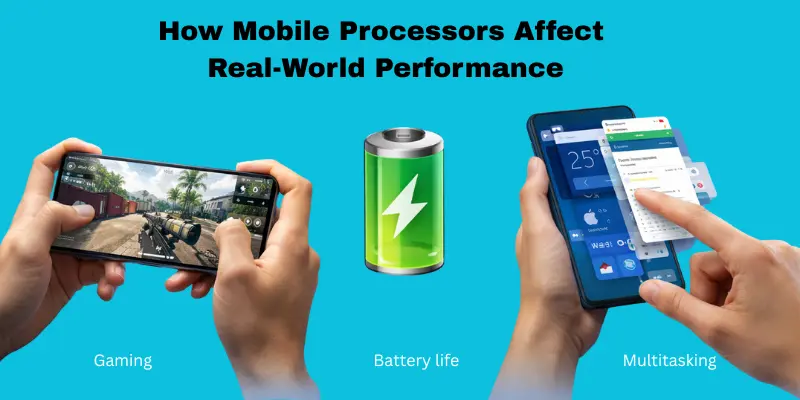
Gaming Performance
High-End Processors (e.g., Snapdragon 8 Gen 2, Apple A-series)
- Run heavy games smoothly.
- Load graphics quickly.
- Keep frame rates high (less lag).
- Best for games like PUBG, Genshin Impact, or racing games.
Mid-Range Processors (e.g., MediaTek mid-series, older Snapdragon)
- Suitable for casual games.
- It may slow down on very heavy graphics.
- Works well for games like Candy Crush or Subway Surfers.
Example:
If you play fast-paced 3D games, a high-end chip loads textures quickly and keeps animations smooth. A mid-range chip might stutter.
Multitasking
High-End Processors
- Switch between many apps fast.
- Keep apps in memory longer (less reloading).
- Great if you use many apps at once.
Mid-Range Processors
- Handle normal app switching well.
- May reload apps more often if many are open.
Example:
Opening a dozen apps and switching back and forth feels fluid on powerful processors, At the same time, mid-range devices may reload apps more often.
Battery Life
Efficient Chips (Apple A-series, newer Snapdragon)
- Use less power for the same tasks.
- Give longer screen-on time.
- Better for full-day use without charging.
Less Efficient Chips
- Use more power under heavy tasks.
- May drain battery faster during gaming or long browsing.
Example:
If you stream videos for hours, an efficient processor lasts longer before needing a charge.
Everyday App Usage
High-End Processors
- Apps open faster.
- Animation and scrolling are smooth.
- Better performance for social apps, messaging, and video calls.
Mid-Range Processors
- Works fine for regular use.
- Good for browsing, texts, and videos.
- Occasional slowdowns with heavy apps.
Example:
Scrolling social feeds feels fluid on all phones, but faster chips make it feel more responsive.
How to Choose the Right Mobile Processor Based on Your Needs
Choosing the right mobile processor can significantly impact your phone’s performance. Here’s a practical guide to help you pick the best one based on what you use your phone for—whether it’s gaming, battery life, photography, or daily tasks. Follow these tips to make an informed decision!
For Gaming : Choose a Powerful Processor
If gaming is a priority for you, you need a processor that can handle intense graphics, fast frame rates, and smooth gameplay. A high-end processor is your best bet.
Recommended Processors:
- Snapdragon 8 Gen 2
- Apple A-series (latest)
Why?
- High-end chips, such as the Snapdragon 8 Gen 2 and the latest Apple A-series, feature powerful GPUs that can handle demanding games like PUBG, Genshin Impact, and Call of Duty Mobile with ease.
- These processors provide smooth gameplay, fast load times, and reduced lag.
What to Look For:
- High clock speeds and powerful GPUs.
- Good thermal management (so your phone doesn’t overheat).
- 8 cores or more for better multitasking and running resource-heavy apps.
For Long Battery Life: Choose a Power-Efficient Processor
If your main priority is battery life, you need a processor that uses power efficiently while still delivering solid performance for everyday tasks.
Recommended Processors:
- Apple A-series (especially older models like the A14 or A15)
- MediaTek Dimensity (Mid-range series)
Why?
- Apple’s A-series chips are renowned for their power efficiency, particularly when paired with iOS. The processor strikes a balance between power and efficiency, providing long-lasting battery life without compromising performance too much.
- MediaTek Dimensity chips offer excellent battery efficiency and are often found in affordable phones, making them perfect for users who prioritize long hours of use on a single charge.
What to Look For:
- A processor that features a balance of performance and efficiency cores.
- Low power consumption when idle or during light tasks (e.g., web browsing, texting).
For Photography and Camera Quality: Choose a Processor with AI Capabilities
If photography is important to you, you’ll need a processor that supports AI-enhanced camera features, such as scene recognition, low-light enhancement, and automatic adjustments for better photos.
Recommended Processors:
- Snapdragon 8 Gen 2
- Apple A-series (A14 or newer)
- Exynos (high-end models)
Why?
- Snapdragon 8 Gen 2 and Apple’s A-series processors feature built-in AI (Neural Processing Units) that automatically enhance your photos, making them sharper, brighter, and more detailed—perfect for capturing stunning pictures, even in challenging lighting conditions.
- Exynos chips in flagship Samsung phones also deliver great AI-enhanced photography.
What to Look For:
- AI processing power (Neural Processing Unit, NPU).
- Advanced image processing features like Night Mode, Portrait Mode, and HDR.
For Everyday Tasks : Choose a Balanced Processor
If you’re using your phone for regular tasks like checking social media, browsing the web, and sending messages, you don’t need the most powerful processor. A mid-range processor will get the job done without breaking the bank.
Recommended Processors:
- MediaTek Helio G95 / Dimensity (Mid-range)
- Snapdragon 7 or 6 Series
- Exynos (Mid-range)
Why?
- These processors offer good performance for everyday use like browsing the web, using social apps, watching videos, and handling emails without any noticeable lag.
- They are typically more affordable and offer solid value for users who don’t need the extra power for gaming or high-end tasks.
What to Look For:
- 8 cores for smooth multitasking.
- Good balance of performance and power efficiency.
The Future of Mobile Processors
As mobile technology continues to evolve, the role of mobile processors is becoming even more crucial. The future of mobile processors will be closely tied to emerging technologies, including artificial intelligence (AI), 5G, and the Internet of Things (IoT). These advancements will not only change how we use our smartphones but will also open up new possibilities for devices in various industries. Let’s explore how mobile processors will evolve to meet these exciting trends.
AI Integration: Specialized AI Processing Units
In the near future, AI will play an even larger role in smartphones, improving everything from photography to voice assistants and even system optimization. As AI becomes more embedded in our daily lives, mobile processors will evolve to handle these tasks more efficiently.
What to Expect:
- Dedicated AI Units: Mobile processors are increasingly incorporating specialized units, such as Neural Processing Units (NPUs) or AI accelerators, to handle machine learning tasks. These units will allow devices to perform AI-based tasks faster and more accurately, without taxing the main processor.
5G Connectivity: Faster Speeds and Low Latency
With the global rollout of 5G, mobile processors will need to evolve to support faster data transfer speeds and low-latency connectivity. 5G technology will be a game-changer for industries like gaming, streaming, remote work, and IoT, as it enables faster downloads, lag-free gaming, and seamless real-time communication.
What to Expect:
- 5G-Ready Processors: Future mobile processors will have built-in 5G modems that support both Sub-6 GHz and mmWave 5G bands, ensuring faster speeds and wider coverage.
- Enhanced Performance: Expect a significant improvement in tasks such as downloading large files, streaming high-quality 4K videos, and playing multiplayer games without lag, all thanks to the speed and responsiveness of 5G networks combined with next-generation processors.
Power Efficiency: Longer Battery Life
With the increasing demand for high-performance tasks such as AI processing, 5G speeds, and IoT connectivity, there will be a greater need for power-efficient mobile processors that do not compromise on performance. Developers will focus on reducing power consumption while still supporting the high demands of future technologies.
What to Expect:
- Smarter Power Management: Future processors will use advanced manufacturing techniques (like 5nm or 3nm nodes) to create more efficient chips. These chips will use less power while performing more complex tasks, meaning longer battery life without sacrificing speed.
Future Trends and the Evolution of Mobile Processors
Looking ahead, here are some additional trends we can expect in mobile processor development:
- More Integration: Mobile processors will continue to integrate more functions (like AI, 5G modems, and GPUs) into a single chip, reducing the size of smartphones and other devices while increasing their power and efficiency.
- Advanced Manufacturing: We’ll see processors built with smaller, more efficient transistors, allowing for more power in a smaller package. This will improve both performance and battery life.
- Greater Customization: Manufacturers like Apple and Samsung will continue to design custom processors tailored to their devices, offering even better integration between hardware and software for a smoother user experience.
Conclusion
So, we’ve covered a lot about mobile processors and how they’re shaping the future of our devices. We discussed how processors like Snapdragon, Apple A-series, MediaTek, and Exynos each have their strengths, depending on your specific needs—whether it’s gaming, battery life, or AI features. We also explored how these processors will evolve to handle exciting advancements in AI, 5G, and IoT, making your phone smarter, faster, and more connected.
FAQs
A mobile processor is the brain of your smartphone. It controls everything from running apps to processing tasks like gaming or browsing the web. It helps your phone respond quickly when you touch the screen or open an app.
The mobile processor is crucial because it significantly affects your phone’s speed, performance, and its ability to handle tasks effectively. A faster processor means your phone runs smoothly and handles apps and games better. It also helps your battery last longer by being more efficient.
The mobile processor is the chip that runs your phone’s tasks, while RAM is temporary memory that helps store data the processor needs to access quickly. The processor makes things happen, and RAM stores the data to keep things running smoothly.
No, a phone cannot work without a processor. The processor is responsible for running all the operations, from powering on the phone to opening apps and connecting to the internet. It’s an essential part of any smartphone.
Mobile processors affect gaming by handling the graphics and speed. A more powerful processor can run games smoothly, with improved visuals and reduced lag. For serious gaming, a high-performance processor, like Snapdragon, is often the best choice.






- Be Respectful
- Stay Relevant
- Stay Positive
- True Feedback
- Encourage Discussion
- Avoid Spamming
- No Fake News
- Don't Copy-Paste
- No Personal Attacks
- Be Respectful
- Stay Relevant
- Stay Positive
- True Feedback
- Encourage Discussion
- Avoid Spamming
- No Fake News
- Don't Copy-Paste
- No Personal Attacks
