Redmi Note 7 Burn In: Causes, Fixes, and How to Prevent Screen Burn
Published: 13 Mar 2026
Have you ever noticed faint icons, keyboard outlines, or shadows lingering on your phone screen? Many users experience Redmi Note 7 burn in, where ghost images or app outlines stay visible even after switching screens. This happens when certain pixels wear out faster than others over time. Knowing why it occurs can help you take simple steps to prevent permanent marks and keep your display clear. By following a few easy tips, you can protect your screen and enjoy a crisp, sharp display for longer.
What Is Screen Burn-In on Smartphones?
Screen burn-in is a display issue in which a faint image stays on the screen for a long time. It happens when the same icons or bars stay in one place for many hours. This effect is also called permanent image retention. Burn-in is more common on OLED screens, while LCD screens usually show only temporary image retention. Some users search for screen burn Xiaomi or burn-in Xiaomi when they notice shadow icons or marks on their phone’s display.
Is Redmi Note 7 Burn-In a Real Problem?
Yes, some users have reported noticing the Redmi Note 7 burn-in issue on their phones. People often talk about it on phone forums and on Reddit. Many users report seeing faint shadows of the keyboard, navigation buttons, or status bar on the screen. These marks may stay visible for a short time even after the screen changes. Because of this, some people describe the problem as Redmi Note 7 screen burn.
However, this issue is not common across all devices. In many cases, the marks are temporary and disappear after some time. It often happens after long periods of screen use, in high-brightness conditions, or when the same image remains on the screen for hours. So while Redmi Note 7 burn in reports do exist, it is usually a minor display issue rather than a serious hardware failure.
Signs of Redmi Note 7 Screen Burn
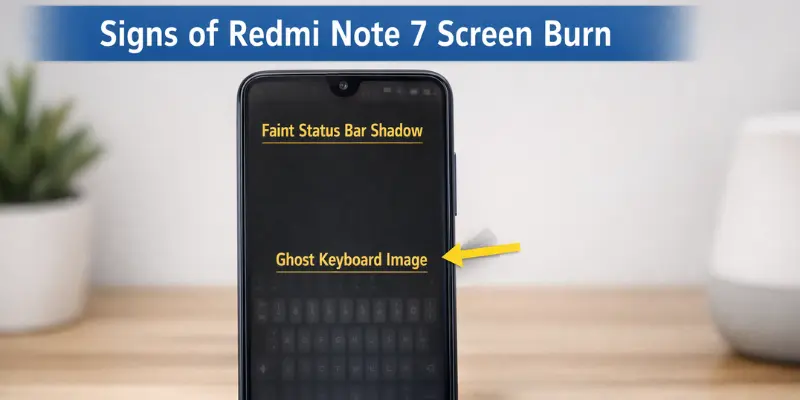
If your phone has a Redmi Note 7 screen burn, you may notice some clear signs. One common symptom is a faint shadow of the status bar that stays visible even when you switch apps. You might also see the keyboard outline on the screen after typing for a long time. Another sign is when navigation buttons appear as ghost images, even when they are not on the screen.
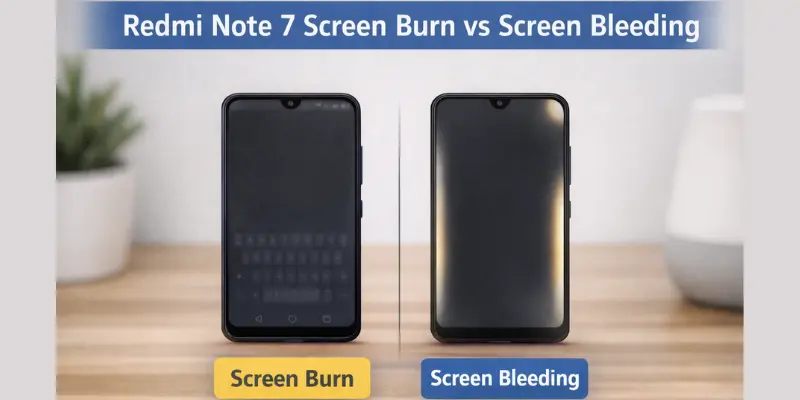
Sometimes users confuse screen burn with Redmi Note 7 screen bleeding, but screen bleeding usually appears as uneven light around the edges. In contrast, screen burn shows ghost images of icons or bars. Recognizing these signs early can help prevent permanent damage and reduce the chance of long-term display issues.
What Causes Redmi Note 7 Burn In?
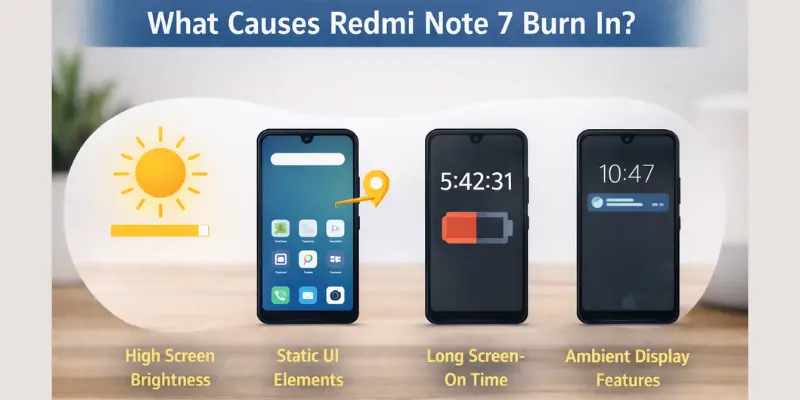
Several factors can lead to a Redmi Note 7 burn in. Understanding these causes can help you prevent screen issues and protect your display.
High Screen Brightness
Keeping your phone at a very high brightness for long periods can wear out pixels faster. This makes parts of the screen show ghost images or faint shadows over time. Key points:
- Setting brightness to maximum for hours stresses pixels.
- Outdoor sunlight mode can increase pixel wear.
- Long-term high brightness accelerates ghost image formation.
Static UI Elements
If you often use apps or games with fixed icons, buttons, or menus, those elements stay on the screen in the same spot. Over time, this can cause the Redmi Note 7 burn in, especially in the status bar or navigation areas. Key points:
- Persistent icons in apps or games create uneven pixel wear.
- Status bar or navigation buttons are common areas affected.
- Frequent use of apps with static layouts increases risk.
Long Screen-On Time
Using your phone for hours without breaks increases the risk of burnout. A high Redmi Note 7 screen-on time means certain pixels are active longer, which can leave permanent marks on the display. Key points:
- Continuous video watching or gaming keeps pixels lit.
- Extended scrolling or reading apps increases pixel stress.
- No rest periods for the screen accelerate burn-in.
Poor Display Calibration
Sometimes the display settings are not optimized. Incorrect color balance or contrast can stress pixels unevenly, making burn-in more likely. Key points:
- Over-saturated colors can wear certain pixels faster.
- High contrast settings increase stress on specific areas.
- An uncalibrated display may show uneven pixel aging.
Ambient Display Features
Features like ambient display, Redmi Note 7 keep parts of the screen always on, showing notifications or clock information. While useful, this can slowly cause screen burn if used excessively. Key points:
- Always-on notifications can leave faint shadows.
- Clock or widgets on the ambient display stress the same pixels repeatedly.
- Continuous use of ambient mode accelerates pixel wear.
How to Fix Redmi Note 7 Burn In
If you notice Redmi Note 7 burn in, there are several practical ways to reduce it or prevent it from getting worse. These steps are simple and can be done through your Redmi 7 settings or Redmi Note 7 setting options.
Reduce Screen Brightness
High brightness makes pixels wear out faster. Lowering it can help reduce ghost images. Tips:
- Go to Redmi Note 7 settings → Display → Brightness.
- Use auto-brightness to adjust based on light conditions.
- Avoid keeping maximum brightness for long periods.
Enable Dark Mode
Dark mode uses fewer bright pixels and reduces stress on the screen. Tips:
- Open Redmi 7 settings → Display → Dark Mode.
- Enable dark mode for apps that support it.
- Use system-wide dark mode for prolonged screen use.
Change Wallpaper
Static wallpapers can worsen burn-in over time. Changing wallpapers frequently helps. Tips:
- Pick wallpapers with moving patterns or darker backgrounds.
- Avoid bright, static images with fixed icons.
- Change your home screen wallpaper every few days.
Screen Refresh Apps
Some apps can help refresh your display and reduce ghost images. Tips:
- Search for screen refresh apps in the Play Store.
- Use pixel shifting or color cycling features.
- Run the app for a few minutes daily to help even out pixel wear.
Display Reset Settings
Resetting display settings can sometimes fix minor burn-in effects. Tips:
- Go to Redmi Note 7 settings → Additional Settings → Reset Display Settings.
- This restores default calibration and reduces uneven pixel stress.
- Combine this with lower brightness and dark mode for the best results.
Redmi Note 7 Screen Burn vs Screen Bleeding
Many users confuse Redmi Note 7 screen burn with Redmi Note 7 screen bleeding, but they are different problems. Screen burn shows faint images of icons or bars that stay on the display, while screen bleeding looks like uneven light around the edges of the screen. Here’s a simple comparison:
| Issue | Meaning |
| Screen Burn | Permanent ghost image on the display |
| Screen Bleeding | Light leak from the edges or corners of the screen |
Understanding the difference helps you take the right steps. Prolonged static images mostly cause screen burn, while screen bleeding usually comes from panel defects or pressure on the screen.
Do Other Xiaomi Phones Have Screen Burn Issues?
Yes, Xiaomi screen burn issues are not limited to the Redmi Note 7. Some users report similar problems on newer models, especially the Redmi Note 8 and Redmi Note 8 Pro. Ghost images, status bar shadows, or faint icons may appear after long screen use.
Redmi Note 8 and Redmi Note 8 Pro Burn-In
- Many users notice the Redmi Note 8 screen burn when static apps or bright images stay on the display for hours.
- Redmi Note 8 burn-in often appears as faint outlines of buttons or the keyboard.
- Burn in Redmi Note 8 is usually minor and sometimes disappears after restarting the phone or changing the wallpaper.
These issues show that long screen-on time, high brightness, and static UI elements can cause burn-in across multiple Xiaomi phones. Being aware of this can help prevent screen burn on your device.
How to Prevent Redmi Note 7 Burn In
Preventing Redmi Note 7 burn in is easier than fixing it. A few simple habits can keep your screen healthy and reduce the chance of ghost images or shadows.
- Lower Brightness – Keep the screen brightness moderate instead of maximum. This reduces pixel wear over time.
- Avoid Static Images – Don’t keep the same app or wallpaper open for hours. Change layouts or wallpapers regularly.
- Use Auto Screen Timeout – Set your phone to turn off the display automatically after a short period of inactivity.
- Enable Dark Mode – Dark mode uses fewer bright pixels, which helps reduce screen stress.
- Update MIUI Regularly – System updates can include fixes and optimizations that protect your display from burn-in.
Following these tips helps prevent Redmi Note 7 burn-in and keeps your phone display looking clear for longer.
When Should You Replace the Screen?
Sometimes, Redmi Note 7 burn in can become permanent. If ghost images or shadows stay on the screen all the time and do not go away after fixes like lowering brightness or changing wallpapers, it may be time to consider a screen replacement. Check your warranty first. Some Xiaomi warranties may cover display issues that occur during normal use, but burn-in caused by heavy use is usually not covered.
Screen replacement cost depends on the service center or third-party repair shop. It can be expensive, so try all practical fixes before replacing the screen. In short, permanent Redmi Note 7 burn in that does not fade is the main reason to replace the display.
Conclusion
Redmi Note 7 burn in is rare but can happen, especially with long screen-on time or static images. Most issues are preventable with simple habits like lowering brightness, enabling dark mode, and changing wallpapers regularly. Temporary ghost images usually fade, but if the burn-in becomes permanent, screen replacement may be the only option. By following these tips, you can keep your phone display clear and avoid long-term problems.
FAQs
Burn-in happens when the same icons, buttons, or images stay on the screen for a long time. High brightness, long screen-on time, and static UI elements increase the risk. Features like ambient display can also stress certain pixels.
Yes, in many cases, burn-in is temporary. You can reduce it by lowering brightness, enabling dark mode, changing wallpapers, or using screen refresh apps. Permanent burn-in may require a screen replacement.
Screen burn is not very common, but some Xiaomi phones, including Redmi Note 7, Redmi Note 8, and Redmi Note 8 Pro, have reported minor issues. Proper care and screen habits can prevent it.
To check for burn-in, open a completely white or black image on full screen. Look closely for faint shadows, ghost icons, or outlines of previous apps. This simple test helps you spot early signs of burn-in.
Yes, most screen burn issues can be prevented with simple habits. Lower screen brightness, use dark mode, avoid static images for long periods, and enable auto screen timeout to protect your display.
No, Redmi Note 7 burn in mainly affects the display visually. It does not slow down your phone or affect apps, but it can be distracting if ghost images or shadows appear on the screen.





- Be Respectful
- Stay Relevant
- Stay Positive
- True Feedback
- Encourage Discussion
- Avoid Spamming
- No Fake News
- Don't Copy-Paste
- No Personal Attacks
- Be Respectful
- Stay Relevant
- Stay Positive
- True Feedback
- Encourage Discussion
- Avoid Spamming
- No Fake News
- Don't Copy-Paste
- No Personal Attacks
