What Is a Mobile Phone? A small device, big impact
Published: 7 Jan 2026
It’s easy to feel confused when one small device seems to handle calls, messages, work, and entertainment all at once. A mobile phone has become such a big part of daily life that many people use it without fully understanding how it fits into everything they do. In this guide, we’ll break things down clearly and simply. You’ll learn about how these devices work, the types available today, their main features, common uses, pros and cons, and what’s coming next-all explained in a way that’s easy to follow.
What is a mobile phone?
What is a mobile phone? It refers to a portable electronic device designed for wireless communication over long distances. The word “mobile” refers to the ability to move freely while staying connected without the need for physical cables. A mobile phone allows people to make voice calls and send messages from almost any location.
How Does a Mobile Phone Work?
A mobile phone works by sending and receiving signals without using wires. It stays connected to a mobile network so people can talk, send messages, and use the internet. The whole process happens in the background within seconds.
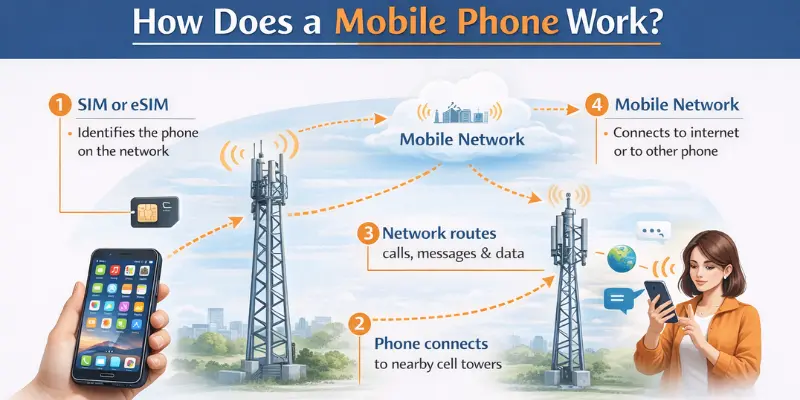
- The phone connects to the nearest cell tower in the area
- The tower links the phone to the mobile network
- A SIM or eSIM identifies the phone and its number
- Voice calls are sent as signals through the network
- Messages travel through the network to the receiver
- Internet data is shared through mobile data or Wi-Fi
- The phone switches towers automatically when you move
Types of Mobile Phones
There are many types of mobile phones that can meet different needs and lifestyles. Some are for simple communication, while others are for more complicated tasks. It’s easier to choose the right one if you know the main types.
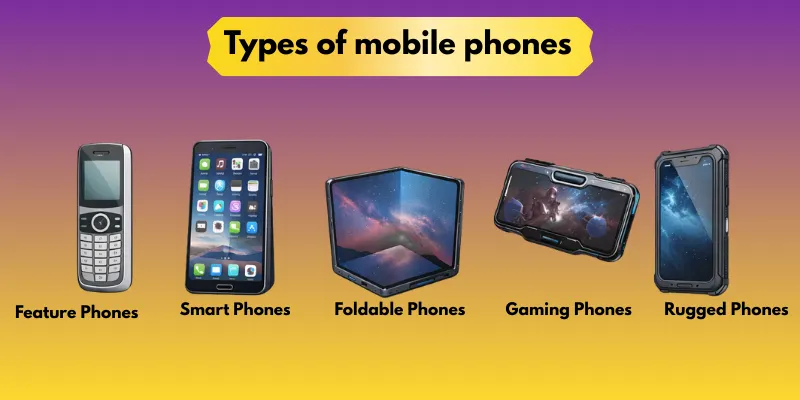
- Feature phones
Basic phones are made for calling and texting, with limited extra functions. - Smartphones
Smartphones that support apps, internet access, cameras, and many daily tasks. - Foldable phones
These phones feature flexible screens that can be folded open or closed to provide a larger display. - Gaming phones
Phones are designed for high performance, smooth graphics, and long gaming sessions. - Rugged phones
Strong phones built to resist water, dust, and rough handling.
Main Parts of a Mobile Phone
The main parts of a mobile phone are its core components that enable it to function as a device for communication, entertainment, and productivity. These parts work together to perform tasks, store data, and allow users to interact with the device.
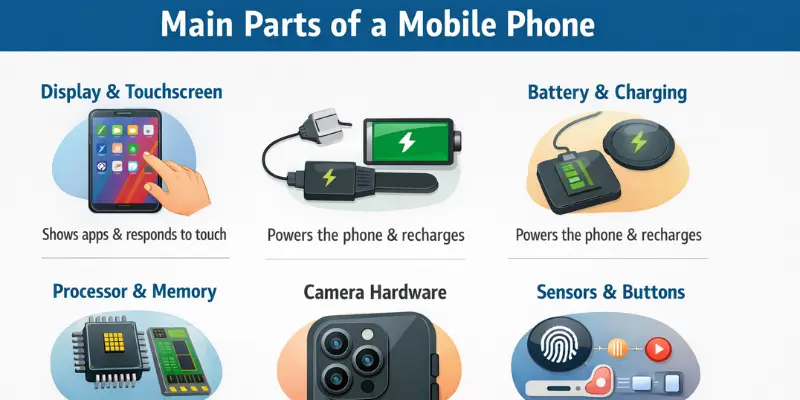
Display and touchscreen
The display is the part of the phone you look at and interact with most. It shows all visual content and responds to your touch for smooth control.
- Shows apps, text, images, and videos
- Allows tapping, swiping, and typing
Battery and charging system
The battery keeps the phone powered throughout the day. The charging system helps recharge the battery when the power level is low.
- Supplies energy to run the phone
- Supports wired and wireless charging
Processor and memory
The processor controls how fast the phone works, while memory helps store data and run apps. Together, they affect overall performance.
- Manages speed and multitasking
- Stores apps, files, and system data
Camera hardware
Camera hardware lets users capture photos and videos for personal and professional use. Modern phones include multiple lenses for better results.
- Takes photos and records videos
- Supports zoom, wide shots, and low-light photos
Sensors and buttons
Sensors help the phone react to its surroundings, and buttons allow quick manual control. Both improve ease of use and security.
- Enables features like fingerprint unlock and auto brightness
- Buttons control power, volume, and basic functions
Operating Systems in Mobile Phones
What a mobile operating system is
A mobile operating system is the core software that enables a phone to function. It manages apps, settings, and hardware so everything runs smoothly.
- Controls how the phone functions
- Allows users to interact with apps and features
Android explained simply
Android is a widely used mobile operating system found on many brands. It offers flexibility and works on phones at different price levels.
- Supports a wide range of apps
- Allows more customization options
iOS is explained simply.
iOS is the operating system designed specifically for iPhones. It focuses on smooth performance and strong privacy protection.
- Works well with other Apple devices
- Known for regular and stable updates
Importance of software updates
Software updates keep a smartphone running safely and efficiently. They improve features and fix problems over time.
- Protect the phone from security risks
- Improve performance and add new features
Uses of a Mobile Phone in Daily Life
Personal communication
Mobile phones make it easy to stay in touch with family, friends, and colleagues. People can connect instantly, no matter where they are.
- Make calls and send messages
- Share photos, videos, and updates
Education and online learning
Smartphones support learning outside the classroom. Students and learners can access study materials at any time.
- Attend online classes and courses
- Read notes and watch learning videos
Work and productivity
Many people use mobile phones to manage work tasks on the go. They help save time and improve efficiency.
- Check emails and attend meetings
- Use tools for planning and organization
Entertainment and media
Mobile phones offer many ways to relax and enjoy free time. They combine music, videos, and games in one device.
- Watch movies and short videos
- Listen to music and play games
Navigation and location services
Phones help people find places and plan routes easily. Location services make travel more convenient and safer.
- Use maps for directions
- Share live location with others
Key Features of Modern Mobile Phones
Modern cell phones have advanced features like high-resolution cameras, powerful processors, and 5G connectivity. These features make them fast and flexible. These smartphones have features that work well with new technologies like AI, facial recognition, and immersive displays to make the user experience better.
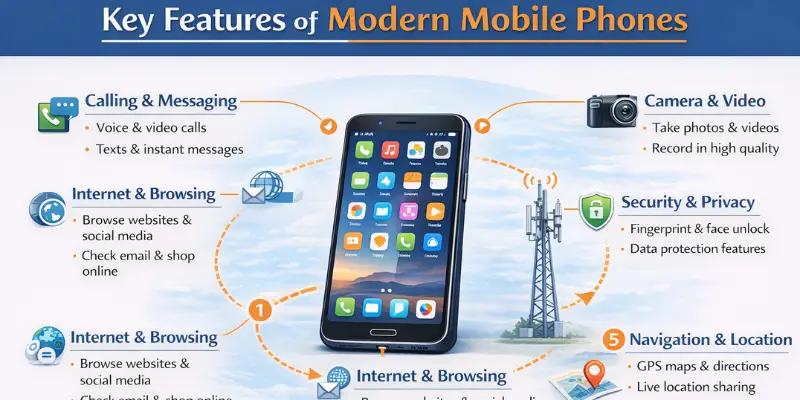
Calling and messaging
Calling and messaging are the basic features that keep people connected. Mobile phones allow clear voice calls and quick text communication anytime.
- Make voice and video calls
- Send texts and instant messages
Internet and browsing
Modern mobile phones let users access the internet from almost anywhere. This makes searching for information fast and convenient.
- Browse websites and social media
- Use email and online services
Mobile applications
Apps turn a mobile phone into a multi-purpose tool. They help with work, learning, shopping, and entertainment.
- Download apps from app stores
- Use apps for daily tasks and fun
Camera and video features
Cameras in modern phones capture moments in high quality. Video recording is also widely used for sharing and creating content.
- Take photos in different modes
- Record and share videos easily
Security and privacy tools
Security tools help protect personal data on the phone. Privacy features give users control over their information.
- Unlock phones using fingerprint or face
- Protect data with passwords and permissions
Advantages and Disadvantages of a Mobile Phone
In this section, we will look at the advantages and disadvantages of using a mobile phone in daily life. While it offers many benefits, it also presents certain problems. Understanding both helps you use them wisely.
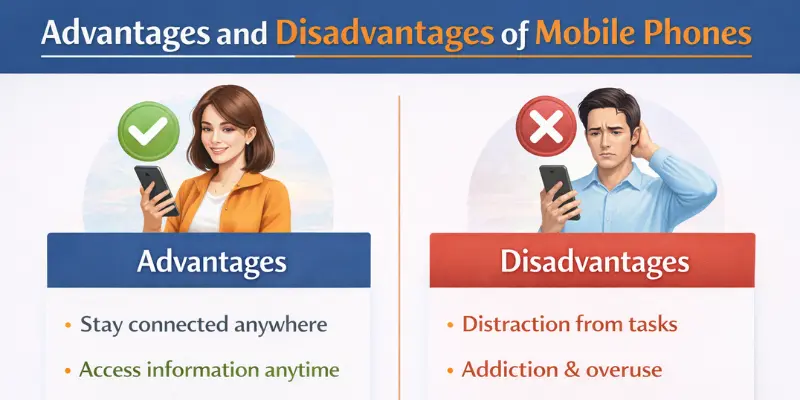
Advantages of a Mobile Phone
Mobile phones make everyday tasks easier and faster for people of all ages.
- Helps people stay connected anytime and anywhere
- Provides quick access to information and the internet
- Supports work, learning, and remote communication
- Offers entertainment like music, videos, and games
- Makes navigation and travel easier
Disadvantages of a Mobile Phone
Using a mobile phone without control can create problems over time.
- Can lead to overuse and screen addiction
- May affect focus, sleep, and social interaction
- Creates privacy and data security risks
- Can cause eye strain and posture issues
- Increases dependence on digital devices
Mobile Phone vs Smartphone
A mobile phone and a smartphone may look similar, but they are made for different needs. One focuses on basic communication, while the other supports many daily tasks. Choosing the right one depends on how the device will be used.
| Mobile Phone | Smartphone |
| Used mainly for calling and texting | Used for calling, internet, and apps |
| Limited or no internet access | Full internet access |
| Few built-in features | Many advanced features |
| Small screen with buttons | Large touchscreen display |
| Basic or no camera | High-quality cameras |
| Very easy to use | Needs some learning |
| Longer battery life | The battery drains faster |
| More affordable | Usually more expensive |
History and Evolution of Mobile Phones
The history of mobile phones began in the 1980s with large, basic devices used for making calls. Over time, phones evolved into smartphones with touchscreens, cameras, and many other features that have changed how we communicate and live.
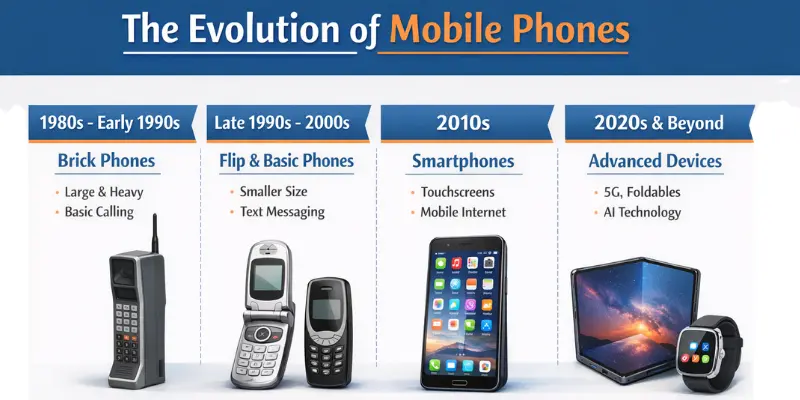
Early mobile phones
Early mobile phones were very different from the ones we use today. They were big, heavy, and mainly designed for making phone calls. The battery did not last long, and the devices were expensive. As a result, only a small number of people used them, mostly for work or emergencies.
Transition from basic phones to smartphones
As technology improved, mobile phones became smaller and easier to carry. Features like text messaging, contact storage, and color screens made them more useful for everyday life. Over time, internet access, cameras, and downloadable apps were added. This shift changed phones from simple calling devices into smart tools that could handle many tasks.
Key milestones in mobile phone technology
Important changes include the move from physical keypads to touchscreens, faster mobile networks, and better battery performance. App stores made it possible to customize phones for different needs. Improvements in cameras, security, and software updates continue to shape how people use mobile phones today.
Mobile Phone Safety and Responsible Use
Safe screen-time habits
Using a mobile phone is part of daily life, but too much screen time can affect sleep, focus, and overall health. Creating healthy habits helps people use phones without letting them take over their time.
- Take regular breaks and avoid using phones right before bedtime
- Balance screen time with outdoor activities, hobbies, and family time
Protecting personal data
Mobile phones store a lot of personal information, so keeping data safe is very important. Simple steps can protect against scams, data theft, and misuse.
- Use strong passwords and avoid sharing personal details online
- Download apps only from trusted sources and check app permissions
Parental controls for children
Children use mobile phones for learning and fun, but they need guidance to stay safe. Parental controls help create a secure and age-appropriate phone experience.
- Set screen-time limits and block unsafe websites or apps
- Talk openly with children about online safety and responsible use
Future of Mobile Phones
Mobile phones continue to change as technology improves. In the coming years, phones will become smarter, faster, and more useful in everyday life. The focus will be on making devices more helpful, simple to use, and connected to everything around us.
Latest trends in mobile technology
Mobile phones are no longer just for making calls or sending messages. New designs and features are shaping how people use their devices every day.
- Slimmer designs with bigger, clearer screens
- Better cameras and longer battery life
AI, foldable screens, and faster networks
Modern phones are becoming more flexible and powerful. New technology is enabling phones to work faster and adapt to various user needs.
- Foldable screens that open like tablets and fold into pockets
- Faster networks that improve browsing, streaming, and online work
How mobile phones may change everyday life
In the future, mobile phones will play an even bigger role in daily routines. They will help people manage time, work, and personal tasks more easily.
- Easier online payments, smart home control, and health tracking
- Better support for learning, remote work, and communication
Conclusion
So, guys, in this guide we clearly explained what is mobile phone is and why it plays such an important role in our daily lives. We covered how mobile phones work, their types, features, uses, advantages, risks, safety tips, and even the future of mobile phones. We designed this guide to assist both beginners and advanced readers, covering everything from basic understanding to modern trends.
My personal recommendation, folks, is to use your mobile phone wisely. It’s a powerful tool that can help you learn, work, stay connected, and save time-but only when used in a balanced way.
FAQs
A mobile phone is primarily used for making calls and sending messages. Today, it is also used for internet browsing, social media, and apps. People use mobile phones for work, study, and entertainment. It helps users stay connected at any time, anywhere.
A mobile phone is a portable device that enables people to make and receive calls wirelessly. It works using mobile networks instead of cables. Modern mobile phones can also access the internet and run apps. They are easy to carry and use on a daily basis.
A mobile phone sends signals to nearby network towers. These signals connect calls, messages, and internet data. The phone uses a SIM card to identify the user on the network. This allows communication even while moving.
A basic mobile phone is mainly for calls and texts. A smartphone can run apps, browse the internet, and take high-quality photos. Smartphones have touchscreens and advanced features. All smartphones are mobile phones, but not all mobile phones are smartphones.
Mobile phones enable fast and easy communication. They help people learn, work online, and manage daily tasks. Phones are also used for payments, navigation, and emergencies. They have become an essential part of modern life.

- Be Respectful
- Stay Relevant
- Stay Positive
- True Feedback
- Encourage Discussion
- Avoid Spamming
- No Fake News
- Don't Copy-Paste
- No Personal Attacks
- Be Respectful
- Stay Relevant
- Stay Positive
- True Feedback
- Encourage Discussion
- Avoid Spamming
- No Fake News
- Don't Copy-Paste
- No Personal Attacks
