Android vs. iOS—A Simple, Actionable Guide
Published: 30 Jan 2026
Choosing between Android vs. iOS isn’t just about picking a phone—it’s about finding an OS that works with the way you live. Do you stick with the smooth, user-friendly experience of iPhone, or do you dive into the world of Android, where customization and freedom reign? With both options offering a wide range of features, it can be tough to know which one suits you best. Should you go for the simplicity and security of iOS or the flexibility and variety of Android? Let’s dive deeper into Android vs. iOS and compare the key differences so you can make the best choice for your needs.
What are Android and iOS?
Android and iOS are the two main systems that run your smartphone. Think of them like the “brains” inside your phone that make everything work.
Android:
Android is the operating system created by Google. Many phone brands, including Samsung, LG, and Google’s Pixel phones, use Android. One of the cool things about Android is that it’s very customizable. This means different phone makers can change the look and feel of Android to make their phones unique. You can also change how things look on Android, such as your home screen or how your apps work.
iOS:
iOS is Apple’s operating system. It’s only used on Apple devices like iPhones, iPads, and iPods. iOS is more controlled because only Apple can make changes to it. This attribute means iOS is often more consistent, providing users with a smooth, reliable experience across all Apple devices.
In short:
- Android gives you more freedom to customize and choose from a wider range of phone brands.
- Apple controls iOS, which is more consistent and easier to use.
Each system has its strengths, so it depends on what you value more: customization or simplicity!
Key Differences Between Android and iOS
Customization and Flexibility: Android vs. iOS
When it comes to customization and flexibility, Android and iOS offer different experiences depending on what you need.
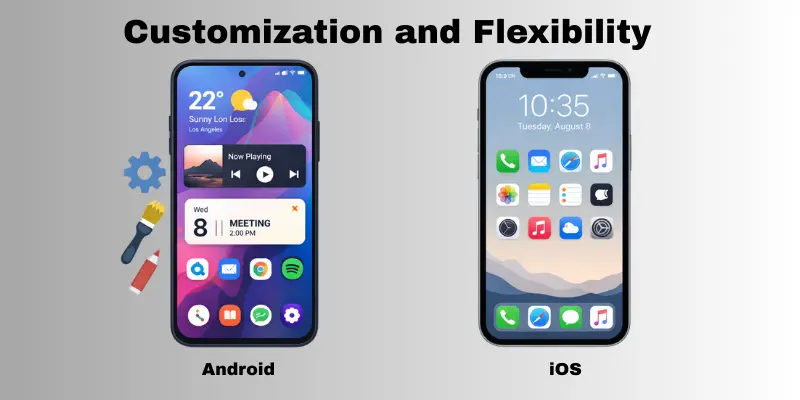
Android: Customization at Your Fingertips
Android lets you personalize nearly every part of your phone. You can add widgets, change icons, and even choose different themes for a fully unique look. For example, you can place weather updates, calendar events, or music controls right on your home screen, making your phone feel truly yours.
iOS: Simple and Streamlined
iOS keeps things clean and simple. You can change your wallpaper and organize apps into folders, but there aren’t many other customization options. This makes iOS ideal for users who want a straightforward, consistent experience without fuss.
Why It Matters
- Android is perfect for those who love customizing their phone and making it unique.
- iOS is excellent for those who want a simple, reliable experience without worrying about customization.
Hardware & Device Variety: Android vs. iOS
When it comes to hardware and device variety, Android and iOS take different approaches, which can significantly impact your consumer choices.
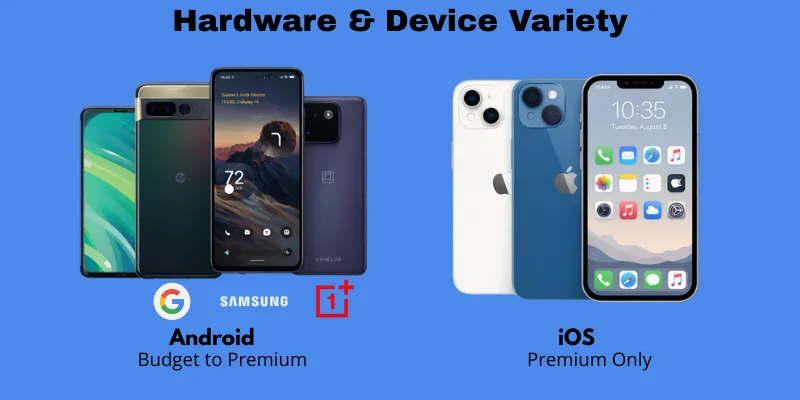
Android: A Phone for Every Budget
One of Android’s biggest strengths is its wide range of devices. From budget-friendly phones to high-end models, Android offers something for everyone. Whether you need a basic phone with good battery life for simple tasks or a premium phone with the latest features, you’ll find plenty of options. Brands like Samsung, Google, and OnePlus offer various Android phones, so you can pick one that fits your needs and budget.
Real-life example: If you’re on a tight budget, you can find excellent Android phones that get the job done without breaking the bank. But if you want the latest camera technology, big screens, and all the premium features, Android has that too.
iOS: Premium Devices Only
On the other hand, iOS is available only on Apple devices, such as the iPhone, iPad, and iPod. All iPhones are premium devices with top-notch build quality and performance, but they come with a higher price tag. Whether you’re looking at the latest iPhone 14 or the iPhone SE, iOS doesn’t offer as many budget-friendly options as Android.
Real-life example: If you’re willing to invest in a premium phone and love the Apple ecosystem, iOS is excellent. However, if you’re on a tight budget, iPhones may seem too expensive.
Why It Matters for Your Budget
- Android offers the flexibility to choose from a wide range of devices, making it perfect for any budget, whether you’re looking for a cheap phone or a high-end model.
- iOS sticks to premium devices, which is great if you’re looking for the latest features, but it comes at a higher cost.
App Stores & Quality: Android vs. iOS
The App Store (iOS) and Google Play Store (Android) are where you download apps. iOS focuses on security and app quality, while Android offers more variety but with fewer controls.
iOS: Quality and Security
Apple’s App Store has stricter rules, leading to higher security and better quality apps. Every app goes through a careful review process, which reduces the risk of malware or bugs. However, there are fewer apps available compared to Android.
Real-life example: If you download an app on iOS, you can generally trust that it will work smoothly and be free of viruses. For instance, if you’re downloading a banking app, iOS will ensure it meets high security standards.
Android: More Variety, Less Control
Android’s Google Play Store is more open, giving users access to a wider variety of apps, including many free ones. But this openness means that some apps may not be as secure or reliable.
Real-life example: On Android, you can find apps for nearly anything, like free games or budget tracking tools. But some of these apps may not have the same level of security, and you might come across an app that crashes or doesn’t work well.
Why It Matters
- iOS offers more security and better app quality, but with fewer options.
- Android has more apps, including free ones, but some may be less secure.
Your choice depends on whether you value security and quality or app variety.
Security and Privacy: Android vs. iOS
When it comes to security and privacy, both iOS and Android offer strong protections, but they do so in different ways. Let’s break it down to help you understand which one might be right for you.
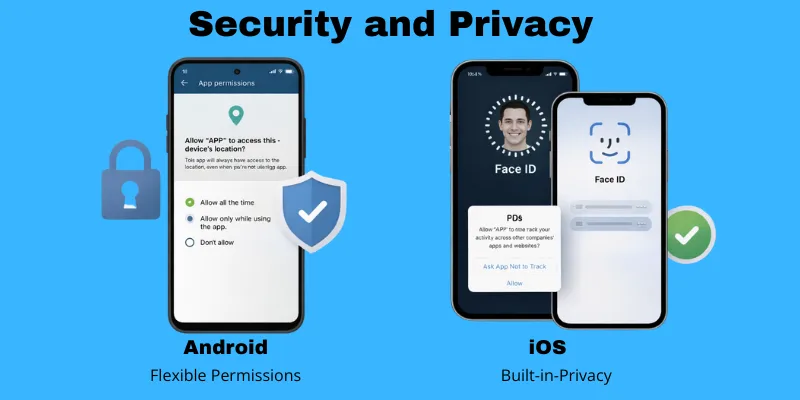
iOS: Built-in Privacy Features
iOS is designed with privacy in mind. Apple includes a range of built-in features to protect your personal data. One of the key features is App Tracking Transparency, which allows you to control which apps can track your activity across other apps and websites. This means you can prevent apps from collecting data about you to show targeted ads.
Real-life example: Let’s say you’re using your iPhone to browse a shopping app. With iOS, you can stop that app from following you around the internet and collecting information about what you search for or buy. This helps keep your data private.
iPhones also use Face ID or Touch ID, which means only you can unlock your phone. This adds an extra layer of protection if someone tries to access your personal information.
Android: More Freedom, but Some Security Risks
On the other hand, Android offers more freedom and customization. You can adjust your phone’s settings and even download apps from places other than the Google Play Store. While this flexibility is excellent, it can also come with some security risks. For example, if you download an app from an unofficial source, there’s no guarantee it’s safe. Some apps might ask for permissions that could put your data at risk, like accessing your camera or contacts without a clear reason.
Real-life example: Suppose you download an app from a website on your Android phone. While this app might look useful, it might ask for permissions that aren’t necessary—like access to your personal photos or messages—putting your data at risk.
Why It Matters
- iOS is great if you want built-in privacy protections and fewer steps to keep your data safe. Apple focuses on making sure your data stays private and secure, which is ideal for security-conscious users.
- Android gives you more freedom to customize your phone, but you’ll need to take extra care with app permissions and where you download apps.
Performance and Speed: Android vs. iOS
When it comes to performance and speed, both iOS and Android have their strengths, but how they perform can vary widely depending on the device.
iOS: Consistent Performance Across Devices
One of iOS’s key strengths is its consistent performance. Apple designs both the hardware and software for its devices, so all Apple products—whether it’s an iPhone, iPad, or iPod—tend to run smoothly, regardless of the model. Whether you’re using the latest iPhone or an older model, iOS is optimized to keep your device running well over time. This means you won’t experience significant slowdowns or lag, even as your phone gets older.
Real-life example: If you have an iPhone 8 and upgrade to an iPhone 14, you’ll notice a smooth transition. Both phones will offer great performance, with the main difference being newer features on the iPhone 14. iOS ensures that even older devices still run well.
Android: Performance Varies by Model
Android, however, can offer a varied performance depending on the phone model. Premium Android devices, such as the Samsung Galaxy S series or Google Pixel, offer top-notch performance and speed. These phones are equipped with powerful processors and high-quality components, so you can expect rapid app loading times, smooth multitasking, and quick responses.
Real-life example: If you get a Samsung Galaxy S23, you’ll enjoy lightning-fast performance. But if you opt for a budget Android phone, like a low-cost Samsung A series or Moto G, the phone might struggle with more demanding tasks like gaming or multitasking. These phones may experience lag or slower processing speeds.
Why It Matters
- iOS provides consistent performance across all Apple devices, making it a good choice if you want reliability and smooth operation, regardless of the model.
- Android offers excellent performance on premium devices, but it can vary significantly on budget phones. If you choose a lower-priced android phone, it might not run as fast or handle demanding apps as smoothly.
Which One Is Best for You?
Choosing between iOS and Android really depends on your personal preferences and what you value most in a phone. Here’s some simple advice to help you decide:
Choose iOS if:
- You want a smooth, simple experience with reliable performance.
- You care about top-notch security and privacy features, like App Tracking Transparency and Face ID.
- You prefer a consistent, polished experience across all devices.
- You’re willing to invest in a premium device for a higher quality, more streamlined experience.
iOS is ideal for users who want reliability, simplicity, and a secure, premium-feeling environment.
Choose Android if:
- You love customizing your phone and making it truly yours with widgets, icons, and themes.
- You want a wider range of options, including budget-friendly phones that still offer great performance.
- You value flexibility in choosing from different brands and models, whether it’s a high-end phone or something more affordable.
Android is great for users who want freedom, variety, and the ability to adjust their devices exactly how they like.
The Bottom Line
The best choice depends on your priorities. If security, simplicity, and premium quality matter most to you, go with iOS. If you want customization, variety, and more affordable options, Android is the way to go. Choose the one that best fits your lifestyle!
Common Myths About Android vs. iOS
When it comes to Android vs. iOS, there are a few common myths that can confuse users. Let’s take a look and clear them up:
Myth 1: iOS is Always Better
Many people think that iOS is always the best choice because it offers a smooth, reliable experience. While iOS definitely provides simplicity and premium quality, it may not be the best fit for everyone.
If you value customization, like changing your phone’s layout, or if you want a wider range of device options, Android might be the better choice for you. With Android, you get more freedom to adjust your phone and more choices of phones at different price points. iOS is more consistent, but that doesn’t mean it’s always the right fit for everyone.
Myth 2: Android Is Always Insecure
Another common myth is that Android is insecure. While Android used to have more security issues, it has made huge improvements over the years. Android now offers regular security updates, better app controls, and more privacy options than ever.
For example, Android 12 introduced more detailed privacy settings, such as an updated privacy dashboard and better control over which apps can access your data. While iOS has always been known for its security, Android has really closed the gap, and with the right precautions, Android can be just as secure as iOS.
Android vs iOS Comparison:
| Feature | Android | iOS |
| Customization | High | Limited |
| Device Variety | Wide Range | Only iPhone |
| App Store | Google Play | Apple App Store |
| Security | Good, varies by device | Very Strong |
| Performance | Varies by model | Optimized |
| Price Range | Budget to Premium | Premium Only |
Conclusion
Now that you know the key differences between Android vs. iOS, think about what matters most to you. Are you someone who loves customization and variety, or do you prefer a seamless experience with strong security? Maybe you’re after a budget-friendly option or the best performance across all devices.
Which system fits your life best? Take a moment to reflect on your needs and choose the one that suits you best!
FAQs
There’s no one-size-fits-all answer. If you prefer customization and a wide range of device options, Android might be a good choice. But if you want a simple, secure, and consistent experience, iOS is a fantastic choice.
Compared to Android, iPhones offer limited customization options. You can change wallpapers, organize apps, and adjust settings, but you can’t modify the interface as much as on Android. iOS focuses on simplicity and ease of use, unlike Android, which offers much more customization flexibility.
Yes, Android phones come in a wide range of prices, including budget-friendly options. iPhones, on the other hand, are only available in premium models, which can be more expensive. Android gives you more choices at different price points.
Android is safe, but it depends on the device and the maker. People know that iOS is very secure on all iPhones. When you compare Android and iOS, iOS is usually more consistent when it comes to security.
iPhones run iOS, which is optimized to work smoothly on Apple’s hardware. Android performance can vary depending on the phone’s model and manufacturer. In general, iPhones offer more consistent performance across devices.




- Be Respectful
- Stay Relevant
- Stay Positive
- True Feedback
- Encourage Discussion
- Avoid Spamming
- No Fake News
- Don't Copy-Paste
- No Personal Attacks
- Be Respectful
- Stay Relevant
- Stay Positive
- True Feedback
- Encourage Discussion
- Avoid Spamming
- No Fake News
- Don't Copy-Paste
- No Personal Attacks
